Watch the episode
5:42 · MP3 · MP4 · Transcript
Made with AI voices (Vera, Sherif). Sherif's voice is an AI clone, used with his approval. Script researched and written with AI and reviewed by TheCircle.ai.
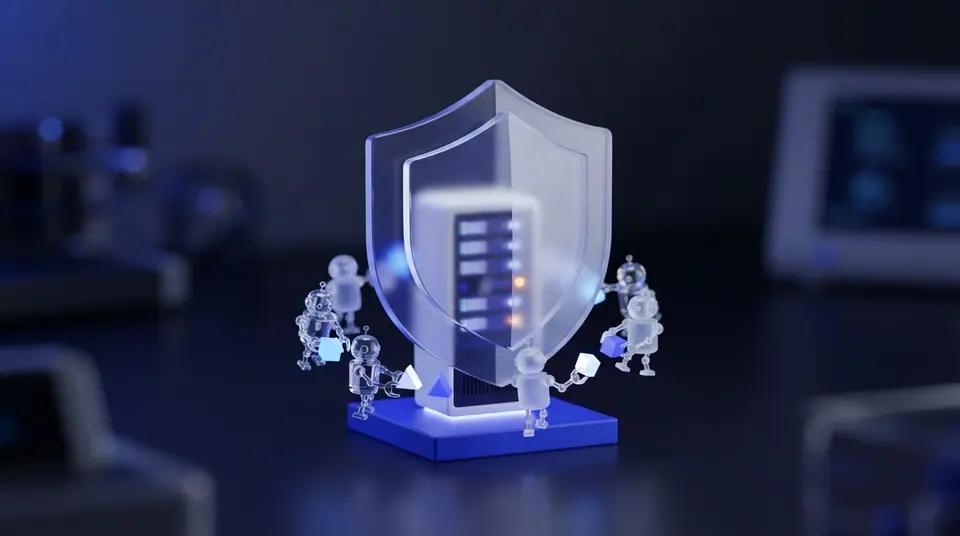
Cisco and OpenAI launched Shirudo, an open-source project using AI agents to generate temporary eBPF kernel shields for Linux systems.
Bridging the Patching Asymmetry
As Cisco CEO Chuck Robbins noted, attacks that took days or weeks now take minutes or hours. To address the asymmetry between AI-accelerated exploit generation and enterprise patch management, Cisco and OpenAI unveiled a new open-source project called Shirudo.
Built as an AI-focused rewrite of Tetragon—the open-source runtime security platform released in 2022 by Cisco-owned Isovalent—Shirudo uses extended Berkeley Packet Filter (eBPF) to run mini-programs directly inside the Linux kernel, allowing systems to block specific vulnerable code paths on the fly without restarting applications.
Testing Against Java4Shell
In a controlled test run by the project builders, Shirudo tackled Java4Shell, a remote code execution and memory corruption flaw discovered by Calif. OpenAI's Codex generated an eBPF shield that added input validation directly to Java's Base64 decoder.
The shield was attached to a running Elasticsearch instance where it rejected malicious input, stopped the exploit cold, and kept the application running continuously without a server restart.
Safety Controls and Current Limitations
Human operators must test every proposed shield against real workloads and explicitly approve it before it goes live. To prevent attackers with root privileges from disabling enforcement, every shield carries a cryptographic signature and uses a TPM 2.0 hardware chip to log active shields.
Despite its promise, Shirudo is currently in pre-release and not ready for production use. It requires specific Linux kernel capabilities, custom kernel patches, and hardware verification, while engineers note that the kernel sometimes lacks a suitable attachment point for a shield.
Key takeaways
- Monitor open-source developments around Shirudo as a future defense for unpatched systems.
- Understand how eBPF enables runtime code path blocking without server restarts or downtime.
- Require human testing and approval before deploying any AI-generated security mitigations.
- Leverage cryptographic signatures and hardware verification like TPM 2.0 to protect active security shields.
Questions this episode answers
What is Shirudo?
Shirudo is an open-source, pre-release security platform jointly developed by Cisco and OpenAI that uses AI agents to generate temporary, kernel-level protections for vulnerable Linux systems.
Is Shirudo ready for production use?
No, Shirudo is currently in pre-release development. It requires specific Linux kernel capabilities, custom kernel patches, and a TPM 2.0 chip, and is not yet ready for production environments.
This article is written from the episode itself (its transcript and the day’s topic brief) and reviewed by TheCircle.ai. The episode cites its original source.
Transcript
Read the full transcript (741 words)
Vera: If an attacker uses AI to weaponize a new Linux vulnerability in minutes, how do you survive when your enterprise patching cycle takes weeks?
Sherif: Usually by pulling an all-nighter and praying you don't take down production. What's the alternative, Vera?
Vera: Cisco and OpenAI just unveiled a new open-source project called Shirudo, named after the Japanese word for shield. It's built to buy security teams time against that exact asymmetry.
Sherif: As Cisco CEO Chuck Robbins pointed out, attacks that took days or weeks now take minutes or hours. Meanwhile, rolling out permanent fixes still takes time.
Vera: Exactly. So Shirudo uses AI agents to write and test temporary kernel-level protections for unpatched Linux systems.
Sherif: Wait, AI agents writing kernel-level protections? How does that actually work under the hood without rebooting the server?
Vera: It's an AI-focused rewrite of Tetragon, the open-source runtime security platform released in 2022 by Cisco-owned Isovalent. It uses extended Berkeley Packet Filter, or eBPF, to run mini-programs right inside the Linux kernel.
Sherif: Got it. And eBPF lets you block a specific vulnerable code path on the fly while the application stays online, right?
Vera: Yes, zero downtime. Normal requests keep flowing while the exploit path gets blocked.
Sherif: Give me a concrete example. Have they actually stopped a real exploit with this?
Vera: They ran a test against Java4Shell, a remote code execution and memory corruption flaw discovered by Calif.
Sherif: Oof. A Java flaw is a nightmare because Java is everywhere in the enterprise. What did the agent do?
Vera: OpenAI's Codex generated an eBPF shield that added input validation directly to Java's Base64 decoder.
Sherif: Just like that? And they attached it to a live server?
Vera: They attached it to a running Elasticsearch instance. It rejected the malicious input, stopped the Java4Shell exploit cold, and kept Elasticsearch running without a restart.
Sherif: Okay, stopping Java4Shell on live Elasticsearch is impressive. Let's talk about what changes on Monday for an infrastructure team, because letting AI inject code into the Linux kernel sounds terrifying.
Vera: It does, which is why human operators stay in the loop. An operator has to test every proposed shield against real workloads and approve it before it goes live.
Sherif: Fair enough. And what if an attacker already has root access and tries to just turn the shield off?
Vera: Every shield carries a cryptographic signature verified before loading. Plus, Shirudo uses a TPM 2.0 hardware chip to log active shields and block even root attackers from disabling kernel-level enforcement.
Sherif: Hardware-backed verification is smart. Can my team deploy this next week?
Vera: Not yet. Here are the big caveats: Shirudo is in pre-release and not ready for production.
Sherif: Why not? What's the blocker?
Vera: Beyond needing that TPM 2.0 chip, it requires specific Linux kernel capabilities and custom kernel patches. Also, that Elasticsearch demo was a single controlled test run by the project builders, not an independent evaluation.
Sherif: Right, a vendor demo always works. And kernel engineers tend to be very protective of stability.
Vera: Very. Upwind CEO Amiram Shachar warned that writing sensitive kernel code on the fly and deploying it to runtime across countless Linux distributions is a very risky concept.
Sherif: Makes sense. Even the people building it admit there are technical limits, right?
Vera: They do. Isovalent engineer John Fastabend noted at a 2026 Linux kernel summit that his team often runs into vulnerabilities where the kernel simply lacks a suitable attachment point for a shield.
Sherif: So if there's no hook in the kernel where the bug lives, eBPF can't shield it. Why release it now under open-source BSD and GPL licenses?
Vera: Because the long-term vision is huge. OpenAI and Cisco want pre-tested Shirudo shields to be distributed right alongside public CVE vulnerability disclosures.
Sherif: Incredible. So when a zero-day drops, you don't just get an alert, you get a cryptographically signed eBPF shield to run until OpenJDK or your vendor ships a real patch.
Vera: And longer term, they want agents generating least-privilege policies automatically. So Sherif, what's the one thing leaders should remember?
Sherif: Bottom line? Agentic AI is moving down the stack into deep runtime infrastructure. We're going to use AI-generated kernel shields to bridge the gap between zero-day disclosure and patch deployment without sacrificing uptime.
Vera: A critical shift for every CISO to watch. Thanks for listening, and we'll see you next time.