Watch the episode
5:19 · MP3 · MP4 · Transcript
Made with AI voices (Vera, Sherif). Sherif's voice is an AI clone, used with his approval. Script researched and written with AI and reviewed by TheCircle.ai.
Danaher and Microsoft are building a hybrid AI platform to control physical laboratory instruments and assist scientists.
Moving AI From Digital Tasks to Physical Hardware
Agentic AI is expanding beyond the browser as Danaher and Microsoft announce a partnership to build an agentic platform that operates physical laboratory hardware. Vera notes that moving from digital tasks to controlling high-precision instruments in regulated environments changes the stakes completely.
Unlike managing spreadsheets where a hallucination is easily fixed, errors on a laboratory instrument can ruin an experiment. The system is designed to translate scientific intent into experimental plans, operate hardware within defined safety boundaries, interpret real-time data, and recommend next steps.
Hybrid Compute Architecture at the Edge and Cloud
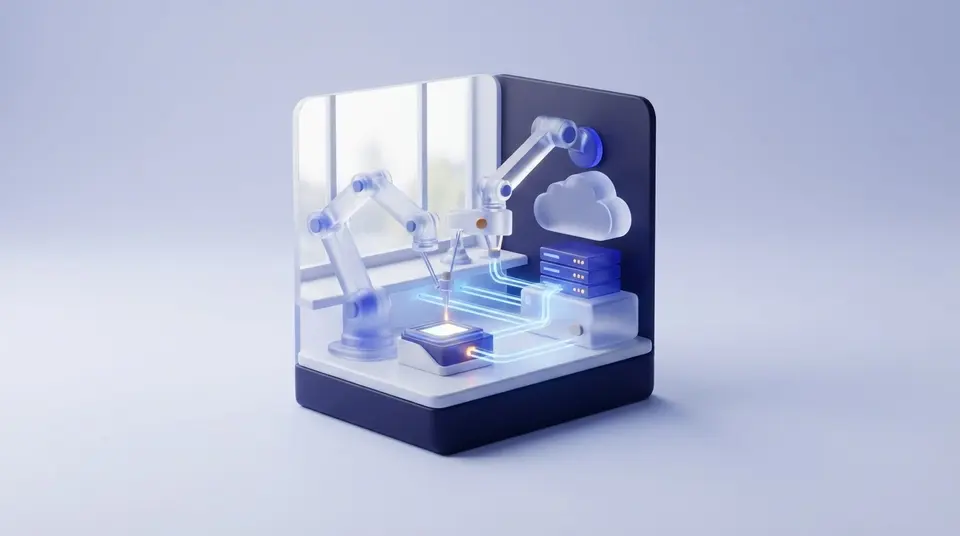
The system relies on a hybrid compute architecture utilizing Microsoft Azure and Microsoft Foundry. Dr. Luciano Lucas of Danaher explained that the approach deploys device-specific agents both in the cloud and directly at the edge on the lab instruments.
This configuration provides low latency for hardware control at the edge alongside cloud scale to connect workflows across the laboratory. However, developers have not yet specified the underlying models, pricing, or the technical specifics of how hardware safety boundaries are enforced.
Preliminary Test Results and Commercial Timeline
In preliminary internal testing reported by the developers, novice scientists using an AI assistant on a Leica microscope completed an experiment in up to 83% less time and with up to 68% fewer steps than novices without it, matching an expert in data quality and completion times. However, Vera emphasizes that these numbers come from preliminary internal testing and have not been independently verified.
The commercial rollout will take time. The first application, the MetaXpress Acquire AI Assistant for Molecular Devices imaging systems, is expected before the end of 2026. Broader agent-enabled instruments across Danaher's businesses are planned for 2027.
An Intensifying Platform Race in Autonomous R&D
The announcement highlights an intense platform race as tech giants and hardware vendors fight to own the interoperability layer of autonomous R&D labs. Competitors are also making moves; Danaher recently collaborated with NVIDIA, and Microsoft partnered with Ginkgo Bioworks in June.
Other instrument makers are adopting AI as well. Waters introduced Anthropic-linked tools for liquid chromatography-mass spectrometry, and MGI Tech uses ProtoPilot to translate experimental plans into automated equipment actions.
Key takeaways
- Evaluate agentic AI for physical operations by focusing on hybrid edge-to-cloud compute architectures rather than cloud model hype alone.
- Inquire about how hardware safety boundaries are strictly enforced before deploying AI near expensive laboratory equipment.
- Monitor the commercial timeline, noting that the first support assistant arrives by late 2026 and broader instrument integration is planned for 2027.
Questions this episode answers
When will the first agent-enabled instruments be available?
The first commercial application, a support assistant for Molecular Devices imaging systems, is expected before the end of 2026. Broader agent-enabled instruments across Danaher's businesses are planned for 2027.
How does the hybrid compute architecture work?
The platform uses Microsoft Azure and Microsoft Foundry in the cloud, while deploying device-specific agents directly at the edge on the lab instruments for low latency.
This article is written from the episode itself (its transcript and the day’s topic brief) and reviewed by TheCircle.ai. The episode cites its original source.
Transcript
Read the full transcript (695 words)
Sherif: Agentic AI is officially leaving the browser. Danaher and Microsoft just announced a partnership to build an agentic platform that actually operates physical laboratory hardware.
Vera: And that's a massive shift, Sherif. Moving from digital tasks to controlling high-precision instruments in regulated environments changes the stakes completely.
Sherif: Right. If an agent hallucinates in a spreadsheet, you fix a cell. If it hallucinates on a microscope, you ruin an experiment. So how are they actually wiring this up?
Vera: Well, it comes down to a hybrid compute architecture. They're using Microsoft Azure and Microsoft Foundry as the underlying tech.
Sherif: Okay, so Azure is the cloud piece. Where does the physical control happen?
Vera: Directly on the hardware. Danaher's Dr. Luciano Lucas explained they're deploying device-specific agents both in the cloud and at the edge, right on the lab instruments.
Sherif: That makes practical sense. You want low latency at the edge when controlling hardware, plus cloud scale to connect workflows across the lab.
Vera: Exactly. It's built to translate scientific intent into experimental plans, operate the hardware within safety boundaries, interpret real-time data, and suggest next steps.
Sherif: Give me the concrete numbers, Vera. If I'm running a lab on Monday, what does this actually speed up?
Vera: Get this. They shared a fascinating test on a Leica microscope. Novice scientists using an AI assistant finished an experiment in up to 83% less time.
Sherif: 83% faster is huge. Did they cut corners on the process?
Vera: Actually, it took up to 68% fewer steps than novices working without the AI. And their data quality and completion times matched an expert.
Sherif: Wait, turning a novice into an expert operator on complex hardware is every operations leader's dream. What's the catch?
Vera: The catch is those numbers are developer-reported from preliminary internal testing. They haven't been independently verified yet.
Sherif: Fair enough. Internal demos always look spotless. And do we know which frontier or open models they're running under the hood?
Vera: No, they haven't specified the underlying models or the pricing. More importantly, they haven't shared the technical specifics of how those hardware safety boundaries are enforced.
Vera: Which brings us to a market reality check on the timeline. Despite the big vision around those four core capabilities, you can't buy an autonomous lab tomorrow.
Sherif: Wait, When does the first actual product ship?
Vera: Before the end of 2026. And that initial rollout is limited to a product support assistant called the MetaXpress Acquire AI Assistant for Molecular Devices imaging systems.
Sherif: Hold on. So late 2026 is just a support assistant? When do we get the true agent-enabled instruments that control the hardware?
Vera: Those broader agent-enabled instruments across Danaher's businesses aren't planned until 2027. The overarching platform is still in active development.
Sherif: So why announce it on November 20 if the real hardware control is a 2027 story?
Vera: Because there's an intense platform race happening right now. Tech giants and instrument makers are fighting to own the interoperability layer of autonomous R&D labs.
Sherif: Right, nobody wants their hardware locked out of the standard lab operating system. Who else is making moves here?
Vera: Everyone is pairing up. Danaher itself recently collaborated with NVIDIA on autonomous science. And back in June, Microsoft partnered with Ginkgo Bioworks to integrate Microsoft Discovery with Ginkgo Cloud Lab.
Sherif: Interesting. So Danaher is working with both Microsoft and NVIDIA. What about competing instrument makers?
Vera: In October, Waters introduced Anthropic-linked tools for liquid chromatography-mass spectrometry. Meanwhile, MGI Tech is using ProtoPilot to translate experimental plans into automated equipment actions.
Sherif: It's Microsoft, NVIDIA, and Anthropic all vying to power the physical lab layer. If I'm an executive watching this space, what's the one thing to remember?
Vera: Bottom line? When evaluating agentic AI for physical operations, look past the cloud model hype. Focus on the hybrid edge-to-cloud compute architecture and ask how hardware safety boundaries are actually enforced.
Sherif: Because without verified safety boundaries at the edge, you just have a chatbot near expensive equipment. Thanks for breaking that down, Vera.
Vera: Always a pleasure, Sherif. See you all next time.