Listen to the episode
4:53 · MP3 · Transcript
Made with AI voices (Sherif, Vera). Sherif's voice is an AI clone, used with his approval. Script researched and written with AI and reviewed by TheCircle.ai.
Shopify introduces Canvas, a new design surface where merchants collaborate with Sidekick to build fully bespoke stores directly from code.
A Live Marketing Workspace for Online Stores
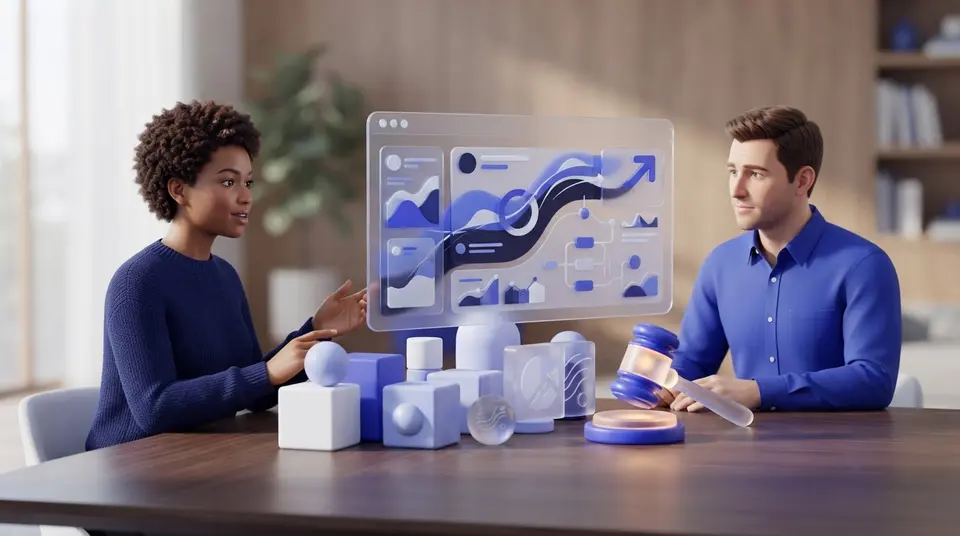
Shopify announced Canvas on October 1st as a new design surface that moves AI beyond copy generation into the commercial surface of the brand. Merchants can view online store pages together, work across the entire experience, and collaborate with Shopify's AI agent, Sidekick, through direct editing or chat.
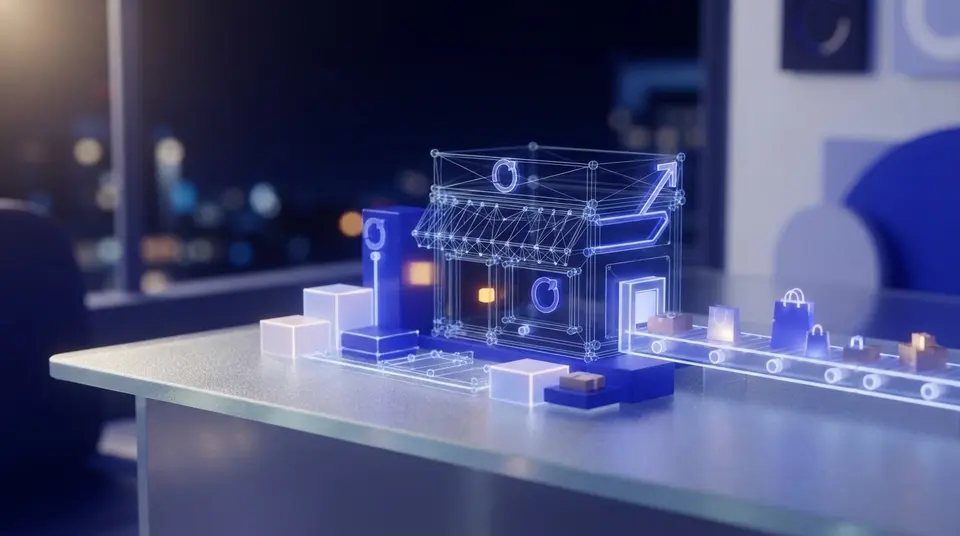
Unlike a static mockup board, Canvas lets merchants work with a render of the real code behind the store. As Sherif notes in the episode, users can preview interactions, animations, products, collections, and screen sizes, effectively turning the storefront into a live marketing workspace.
Compressing the Campaign Cycle and Managing Constraints
Vera points out that Canvas compresses the traditional campaign cycle, which historically required moving from brief to wireframe, developer ticket, QA, and merchandising review. Merchants can now ask Sidekick to make launch pages feel more editorial or carry a product story across collection pages.
However, the episode highlights important constraints disclosed in the Shopify changelog. At launch, Canvas does not support third-party themes from the Shopify theme store, markets, rollouts, translations, or app blocks and app embeds. Furthermore, themes edited in Canvas do not receive theme updates.
Adoption Evidence and Strategic Deployment
Shopify disclosed that Sidekick made more than 25 million theme edits in the first half of 2026, providing adoption evidence for AI-assisted editing even though performance outcomes like conversion rate improvements remain to be proven.
Vera warns that speed can multiply mediocrity if teams start with weak positioning or messy product data. Agencies and e-commerce leads are advised to pilot Canvas as a campaign design accelerator using a duplicate theme or bounded store section rather than unguided design autopilot.
Key takeaways
- Pilot Shopify Canvas on a product launch page or seasonal collection using a duplicate theme or bounded store environment.
- Evaluate Sidekick outputs based on human edits required, brand voice preservation, accessibility across mobile and desktop, and campaign metrics.
- Do not move heavily customized revenue-critical themes into Canvas without verifying app dependencies, localization, and update paths.
- Focus KPIs on commercial storytelling at lower cycle time with fewer handoff errors rather than just checking if AI built a page.
Questions this episode answers
What is Shopify Canvas?
Shopify Canvas is a new design surface announced on October 1st where merchants can view store pages together and collaborate with Sidekick, Shopify's AI agent, by working directly with a render of the real store code.
What features are missing from Shopify Canvas at launch?
At launch, Canvas does not support third-party themes from the Shopify theme store, markets, rollouts, translations, or app blocks and app embeds. Themes edited in Canvas also do not receive theme updates.
This article is written from the episode itself (its transcript and the day’s topic brief) and reviewed by TheCircle.ai.
Transcript
Read the full transcript (787 words)
Sherif: Good morning. Our first marketing story is Shopify Canvas. And I think this one matters because it moves AI from copy generation into the actual commercial surface of the brand.
Vera: Exactly. Shopify announced Canvas on October 1st. It is a new design surface where merchants can see the pages of an online store together, work across the whole experience, and collaborate with Sidekick, Shopify's AI agent through direct editing or chat.
Sherif: The important detail is that Canvas is not described as a static mockup board. Shopify says merchants are working with the render of the real code behind the store. They can preview interactions, animations, different products, collections, and screen sizes. That turns the storefront into a live marketing workspace.
Vera: And that changes the role of the marketer. Historically, a campaign idea had to travel from brief to landing page wireframe, to developer ticket, to QA, to merchandising review. Canvas compresses some of that cycle. A merchant can say, "Make this launch page feel more editorial," or "Carry this product story across collection and product pages." And Sidekick can propose changes across the theme.
Sherif: Let us separate vendor promise from operational proof. Shopify says Canvas is rolling out over the coming days and gives merchants a way to create a fully custom store with Sidekick. Shopify also says Sidekick made more than 25 million theme edits in the first half of 2026. That is adoption evidence for AI-assisted editing, but it is not proof that Canvas automatically improves conversion, average order value, or brand recall.
Vera: Right. The practical takeaway is not "replace design strategy." It is "raise the speed of experimentation, then govern the quality." If a brand can redesign a launch page in minutes, the bottleneck moves from production capacity to taste, evidence, and decision discipline.
Sherif: For CMOs and e-commerce leads, the biggest opportunity is campaign-to-store consistency. Too many paid ads lead to pages that look like they came from a different brand or a different week. Canvas could make it easier to align hero copy, product education, bundle logic, proof points, and checkout paths around one campaign idea.
Vera: But the danger is the same as every AI creative tool. Speed can multiply mediocrity. If the team has weak positioning, unclear category language, or messy product data, Canvas can generate more variations of the same confusion. The best operators will start with a sharper brief, not with a blank chatbot.
Sherif: Shopify also disclosed constraints in the changelog. At launch, Canvas does not support third-party themes from the Shopify theme store, markets, rollouts, translations, or app blocks and app embeds. Themes edited in Canvas do not receive theme updates.
Vera: That matters a lot. For international merchants, agencies, and stores with complex app ecosystems, this is not a universal production replacement yet. A good pilot should use a duplicate theme, a bounded store section, or a campaign-specific environment. Do not move a heavily customized revenue-critical theme into a new workflow without checking update paths, localization, and app dependencies.
Sherif: What would you test first?
Vera: I would test a product launch page or seasonal collection. Give Sidekick a real brief: the audience, positioning, offer, reasons to believe, visual direction, objections, compliance limits, and the target action. Then, measure three things. First, how many human edits were required before approval? Second, whether the page preserved brand voice and accessibility across mobile and desktop. Third, whether the live page improves the campaign metric compared with the current process.
Sherif: So the KPI is not AI-built a page.
Vera: Exactly. The KPI is better commercial storytelling at lower cycle time with fewer handoff errors. Agencies should hear this as a service shift. The value moves from simply building Shopify pages to designing AI-ready brand systems, reusable page patterns, approved claims, merchandising rules, visual guardrails, and conversion testing plans.
Sherif: There is also a creator economy angle. Smaller merchants and creator-led brands often know the feeling they want, but cannot translate it into team architecture. Canvas gives them a collaborator that can make a tangible version they can react to.
Vera: And that is where the tool could be most powerful. It lowers the cost of having a distinct store. But distinct does not mean random. It means the shopping experience expresses the brand clearly, helps the customer decide, and removes friction.
Sherif: Final verdict?
Vera: High practitioner value, especially for e-commerce teams. Evidence quality is strong on product availability and workflow, early on performance outcomes. The smart move is to pilot Canvas as a campaign design accelerator, not as an unguided design autopilot. The brands that win will pair fast AI execution with human taste, clean product truth, and disciplined measurement.