Listen to the episode
4:05 · MP3 · Transcript
Made with AI voices (Sherif, Vera). Sherif's voice is an AI clone, used with his approval. Script researched and written with AI and reviewed by TheCircle.ai.
Pinterest announced visual search ads, AI-powered home restyling, and performance plus campaign updates at Pinterest Presents.
Visual Search and Intent
Pinterest used its Pinterest Presents event to announce visual search ads, AI-powered restyling for home decor, updates to performance plus campaigns, and a new app promotion option. Social media today reported the announcement on September 17th, noting that visual search ads will put paid promotions inside Pinterest search results and pin close-ups.
Pinterest says it facilitates more than 80 billion searches per month and that most are visual. Sherif notes, 'the important part is not just new ad placement. It is the moment of intent.' This means people are showing intent through images, styles, rooms, outfits, colors, and objects rather than just typing keywords.
Creative Systems and Restyling
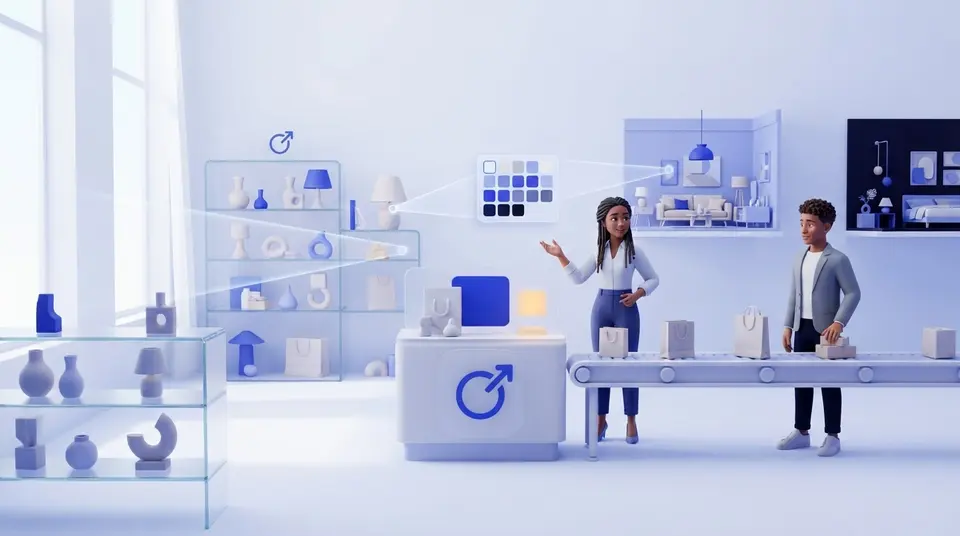
Vera explains that the ad unit is moving closer to the visual decision itself when users zoom in on items like a sofa, a lamp, a kitchen tile, or a wedding centerpiece. The AI restyle feature turns inspiration into simulation by allowing users to reimagine a space, test a look, and compare options before purchase.
Brands must make product feeds and creative systems more visual search ready. Clean product shots, lifestyle variants, alternate angles, room context, color metadata, and availability data become part of discoverability rather than treating the image library as only an asset repository.
Measurement, Categories, and Strategy
Pinterest is providing advertisers with more automation through performance plus updates, including priority products and self-serve AB testing. Vera notes that marketers still need proof of campaign level lift, incrementality, assisted conversions, margin impact, and repeatable results in beta markets.
Categories to watch include home, beauty, fashion, food, weddings, travel, and lifestyle retail. CMOs face a strategic takeaway: discovery is becoming object-based rather than keyword-based, requiring search, creative, merchandising, and media teams to work from the same product truth.
Key takeaways
- Prepare product feeds and creative systems to be visual search ready with clean product shots, lifestyle variants, and color metadata.
- Pick one high intent category to clean product feeds, map visual contexts, and prepare tests for Pinterest beta.
- Build visual search audits into paid social and commerce retainers to ensure products are visually legible to platforms and AI.
- Align search, creative, merchandising, and media buying teams to work from a unified product truth.
Questions this episode answers
What new features were announced at Pinterest Presents?
Pinterest announced visual search ads, AI-powered restyling for home decor, updates to performance plus campaigns, and a new app promotion option.
How many searches does Pinterest facilitate per month?
Pinterest says it facilitates more than 80 billion searches per month.
This article is written from the episode itself (its transcript and the day’s topic brief) and reviewed by TheCircle.ai.
Transcript
Read the full transcript (663 words)
Sherif: Today we are starting with Pinterest because this is one of those platform updates that looks tactical, but points to a bigger shift in how discovery is being monetized.
Vera: Exactly. Pinterest used its Pinterest Presents event to announce visual search ads, AI-powered restyling for home decor, updates to performance plus campaigns, and a new app promotion option. Social media today reported the announcement on September 17th, noting that visual search ads will put paid promotions inside Pinterest search results and pin close-ups.
Sherif: So the important part is not just new ad placement. It is the moment of intent. Pinterest says it facilitates more than 80 billion searches per month and that most are visual. That means people are not only typing intent, they are showing intent through images, styles, rooms, outfits, colors and objects.
Vera: For brands, that changes the creative brief. The ad unit is moving closer to the visual decision itself. If a user zooms in on a sofa, a lamp, a kitchen tile, or a wedding centerpiece, the commercial opportunity is not a broad audience segment. It is a live visual context.
Sherif: And the AI restyle feature matters because it turns inspiration into simulation. A user can reimagine a space, test a look, and compare options before purchase. That is a richer signal than a click. It tells the platform what style language, product category, and buying situation the user is exploring.
Vera: The practitioner implication is that product feeds and creative systems need to become more visual search ready. Brands should stop treating the image library as only an asset repository. It becomes structured performance media. Clean product shots, lifestyle variants, alternate angles, room context, color metadata, and availability data all become part of discoverability.
Sherif: There is also a measurement question. Pinterest is giving advertisers more automation with performance plus updates, including priority products and self-serve AB testing. That is useful, but it also means teams need test discipline, which products get prioritized, which images trigger consideration, which visual contexts produce incremental demand versus just harvesting existing intent.
Vera: I would separate vendor claim from adoption proof here. The platform claim is that visual search ads and AI restyle can create more contextual discovery and commerce. The proof marketers still need is campaign level lift, incrementality, assisted conversions, margin impact, and whether the beta markets show repeatable results across categories.
Sherif: The categories to watch first are home, beauty, fashion, food, weddings, travel, and lifestyle retail. Basically, any vertical where people decide with their eyes before they decide with a form fill or checkout.
Vera: Agencies should also pay attention. This is a strong reason to build visual search audits into paid social and commerce retainers, not just are we on Pinterest, but are our products visually legible to the platform, to the user, and to AI assisted matching.
Sherif: And for CMOs, the strategic takeaway is that discovery is becoming more object-based and less keyword-based. Search teams, creative teams, merchandising teams, and media buyers need to work from the same product truth. The old handoff where creative makes assets and performance teams upload them later is too slow.
Vera: The right move this week is practical. Pick one high intent category. Clean the product feed, map the visual contexts that matter, and prepare tests for Pinterest beta if the market is available. Even if the brand is not on Pinterest yet, this is a preview of where other platforms are going.
Sherif: Because visual intent will not stay inside Pinterest.
Vera: No, it will show up in AI shopping, camera search, marketplace search, and creator-led commerce. The brands that prepare their visual content systems now will have an advantage when these surfaces become standard buying behavior.
Sherif: So the headline is not just Pinterest added AI features.
Vera: The headline is that product discovery is becoming visual, interactive, and measurable at the moment of imagination. That is a very different marketing operating model.