Daily brief
Podcast briefs for 27 July 2026
6 episodes published on 27 July 2026, with the day’s topic-summary brief for each show.
AI Marketing brief
All AI Marketing episodesAI Trust Campaigns and the Accountability Gap
Our second story is about AI companies marketing trust. Business Insider reported on a new wave of defensive advertising from Meta and Anthropic, with both trying to persuade the public that AI can be good, safe, and human-centered. The timing matters. Business Insider published the piece on July 25, and it frames the campaigns against rising public skepticism. The article cites Pew Research Center data saying 40 percent of Americans expect AI to have a negative impact on society, while only 16 percent expect a positive impact. It also cites Gallup polling showing strong local opposition to data centers. This is a marketing story, not just a tech reputation story.
AMD and Cerebras Accelerator Diversification
Our first AI tech story is about compute diversification. The pipeline ranked AMD and Cerebras deals as today's strongest signal because AI infrastructure buyers are looking beyond a single accelerator supplier. The evidence base combines fresh coverage from Investor's Business Daily with AMD's official announcement from July 22. AMD says Anthropic plans to deploy up to two gigawatts of AMD Instinct MI450 GPUs in Helios rack-scale systems, with the first gigawatt beginning in the first half of 2027. That is a big number, but we should separate the vendor claim from adoption proof. AMD's claim is that its Helios rack-scale systems and MI450 GPUs can support frontier AI workloads. The adoption proof is Anthropic naming AMD as a strategic compute partner and attaching future deployment capacity to that roadmap.
Claude Opus 5 and Long-Running Agentic Work
Our third AI tech story is Anthropic launching Claude Opus 5. The strategic point is that frontier model competition is becoming less about broad intelligence claims and more about reliable long-running work. Anthropic announced Opus 5 on July 24. The company says it is available now and positions it as a strong Opus-tier model for coding, knowledge work, verification-heavy tasks, and long-running agents. The vendor claim is improved performance and efficiency compared with Opus 4.8, with near-frontier behavior at the Opus tier. The adoption proof is the number of named early customers reporting concrete workflow gains. Those customer reports span developer tools, automation, finance, legal, healthcare, enterprise content, and agent platforms.
Gemini and Google's Ad Performance Proof
Our third story is Google's ad business getting a visible lift from Gemini improvements and World Cup demand. Marketing Dive reported that Google's ad revenue grew 14 percent year over year to 81.6 billion dollars in Q2, while Search and other revenue rose nearly 17 percent to 63.3 billion dollars. The article also says executives credited Gemini with improving relevance for users and value for advertisers, especially in search. And it reported a 20 percent improvement in delivering highly relevant ads for commerce-enabled shopping campaigns thanks to AI. This is important because it answers one of the biggest questions in marketing: is AI search replacing Google's ad engine, or strengthening it? At least in this quarter, the evidence points to strengthening. Marketing Dive quotes Emarketer analyst Nate Elliott saying the gains support Google's claim that AI is additive to search, not a replacement.
Michaels and the Conversion Proof Test
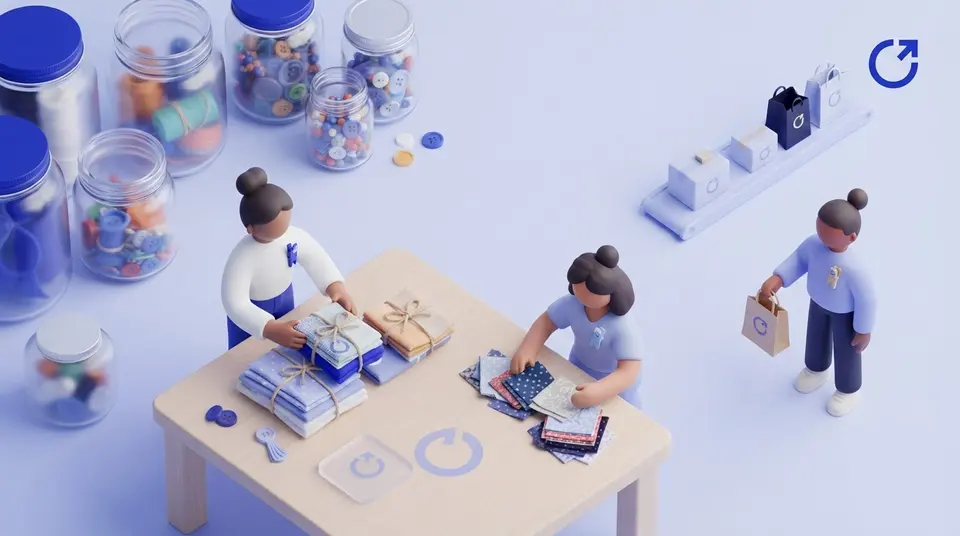
Our first marketing story today is Michaels, the arts and crafts retailer, saying its Google Gemini-powered shopping assistant is converting at roughly twice the rate of traditional site search. The assistant is called Ask Mike. Digiday reports that Michaels formally announced it on July 21, and the use case is very practical: a shopper can ask for help planning a child's birthday party, finding kids' summer craft ideas, choosing fabric for curtains, or selecting a frame for a vacation photo. The assistant then asks for project details like colors, materials, type of project, and budget. The reason this matters is that it moves AI from novelty into merchandising. This is not just a chatbot sitting in the corner of the website. It is an intent-capture layer that can translate an uncertain customer need into a shoppable plan.
Microsoft-Hosted Open-Weight AI Coalition
Our second AI tech story is the Microsoft-hosted open-weight AI coalition. The letter, called Open Weights and American AI Leadership, has become a broad policy signal across the AI ecosystem. Microsoft hosts the letter and signatory list. The names matter: Microsoft, NVIDIA, Meta, Google, OpenAI, AMD, Hugging Face, Mistral, Mozilla, IBM, Palantir, and many others. That is a cross-section of cloud, chips, model labs, developer tools, security, and open-source infrastructure. The coalition argues that open-weight models help competition, safety research, sovereignty, and broad economic diffusion. That is the claim.